CPEN 442 — Introduction to Cybersecurity (2026W1)
This is a public copy of the course syllabus. Registered students should follow Canvas, which is authoritative if the two ever disagree.
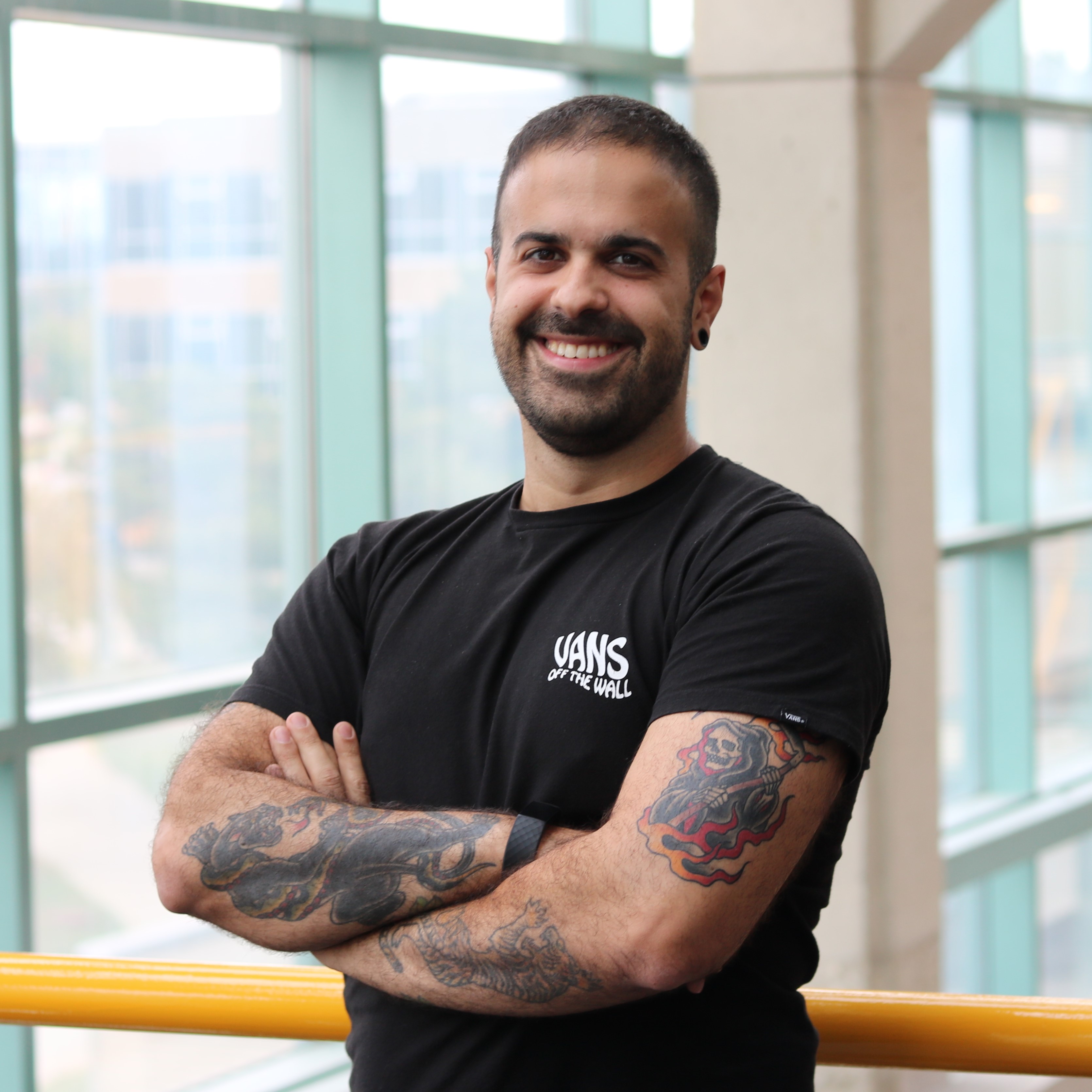
- Instructor: Simon Oya · simon.oya@ubc.ca · Office KAIS 4110
- Office hours: Friday 12:00–13:00, or by appointment
Teaching assistants: Evan Rossiter · Ali Bazshoushtari · Mohammed Elnawawy
- Lectures (not mandatory): Tue & Thu 12:30–14:00, CHBE 102
Lab sessions (not mandatory): Fri 14:00–16:00, TBD
- Piazza: For announcements and discussion, please get self-enrolment link from Piazza.
- PrairieLearn: For quizzes and all three exams.
- Canvas: For slides and course materials.
- Recordings: TBD
Course overview
This course is an introduction to cybersecurity: cryptography, access control, applications of cryptography, privacy, software security, network security, and selected topics including the security and privacy of machine learning.
The course is foundational. The goal is that you develop a security mindset, learn to reason about threat models, and understand the core concepts underlying cryptography. By the end you should be able to identify security issues in programs, networks and Internet applications, and use that awareness to design systems that better protect security and privacy.
Course outline
Cybersecurity is broad, so we go deep on only a few topics — marked with an asterisk.
- Introduction and threat models — definitions of security and privacy, types of attacks, methods of defence.
- Cryptography* — symmetric cryptography, public-key cryptography, integrity and authentication.
- Access control — password authentication, passwordless authentication, authorization.
- Cryptography use-cases* — cryptography at the link, network, transport and application layers; anonymous communication systems; blockchain.
- Privacy* — privacy definitions, privacy attacks, differential privacy.
- Software security — malicious and non-malicious program errors, malicious code, controls against program threats.
- Network security — network threats, firewalls, intrusion detection systems.
- Selected topics in security and privacy — primarily the security and privacy of machine learning; ethics and other topics as time allows.
Schedule
Approximate, and subject to change. Exact due dates and times are on Canvas.
| Week | Dates | Topics | Assessment |
|---|---|---|---|
| 1 | Sep 7–11 | Introduction and threat models (M1) | |
| 2 | Sep 14–18 | Cryptography (M2) | A1 out |
| 3 | Sep 21–25 | Cryptography (M2) | A1 due · A2 out |
| 4 | Sep 28–Oct 2 | Cryptography (M2); access control (M3) | A2 due |
| 5 | Oct 5–9 | Access control (M3); cryptography use-cases (M4) | Midterm 1 |
| 6 | Oct 12–16 | Cryptography use-cases (M4) | A3 out |
| 7 | Oct 19–23 | Cryptography use-cases (M4) | A3 due |
| 8 | Oct 26–30 | Cryptography use-cases (M4); privacy (M5) | A4 out and due |
| 9 | Nov 2–6 | Privacy (M5) | Midterm 2 |
| 10 | Nov 9–13 | Privacy (M5) — November break, one lecture only | |
| 11 | Nov 16–20 | Selected topics (M8); software security (M6) | A5 out |
| 12 | Nov 23–27 | Software security (M6); network security (M7) | |
| 13 | Nov 30–Dec 4 | Network security (M7); wrap-up | A5 due |
| December | Final exam (date set by the university) |
Classes are Tuesday and Thursday, with a Friday lab session. Week 1 has no Tuesday class (Imagine Day) and week 10 has no Tuesday class (November break).
Module quizzes open as each module is covered; dates are on Canvas.
Grading
| Component | Weight |
|---|---|
| Module quizzes (7, PrairieLearn) | 10% |
| Assignments (5) | 45% |
| Midterm 1 | 10% |
| Midterm 2 | 10% |
| Final exam | 25% |
There is no minimum exam grade required to pass the course.
Module quizzes (10%). One quiz per module, in PrairieLearn. You get unlimited attempts and your best grade counts, and you can generate a fresh version of any question as often as you like. These are not a formality: they drill the same question types that appear on the exams, so they are your main practice. Quizzes are weighted by module size — the cryptography quiz is worth substantially more than the others.
Assignments (45%). Five assignments, done individually or in pairs, most involving Python. Discussing approaches with other students is fine and encouraged; copying is not. Generative AI is allowed but you must declare how and where you used it.
Exams (10% + 10% + 25%). Two midterms and a final, all in PrairieLearn. Each midterm is written in a slot you book during that week; the final is scheduled by the university. No notes sheet, and nothing requires memorization. Question formats are announced in advance and the quizzes and practice problems are your worked examples — but some specific instances on the exam will be new.
Exam questions trace back to an assigment, quiz, or a practice problem. Letting AI do an assignment for you is not a shortcut — it skips the preparation for proctored questions worth more than the assignment itself.
How the course runs
Lectures. Slides are posted on Canvas before each lecture. They contain question blocks with answers hidden; a version with answers revealed is posted after each module is finished. Attendance not mandatory.
Lab sessions. Assignment help and extended office hours. Attendance not mandatory.
Piazza. For all course questions and discussion — use the right folder (assignments, modules, logistics, exams). Announcements go here too. If your question might reveal an assignment answer, post it privately.
Course materials
Slides are on Canvas under Modules. Two recommended textbooks, both free to you:
- van Oorschot, Computer Security and the Internet: Tools and Jewels — freely available from the author’s website.
- Stamp, Information Security: Principles and Practice — available online through the UBC Library.
Any additional readings will also be publicly available.
UBC policy on academic integrity
The academic enterprise is founded on honesty, civility, and integrity. As members of this enterprise, all students are expected to know, understand, and follow the UBC codes of conduct regarding academic integrity. At the most basic level, this means submitting only original work done by you and acknowledging all sources of information or ideas and attributing them to others as required. This also means you should not cheat, copy, or mislead others about what is your work. Violations of academic integrity (i.e., misconduct) lead to the breakdown of the academic enterprise, and therefore serious consequences arise and harsh sanctions are imposed. For example, incidents of plagiarism or cheating may result in a mark of zero on an assignment or exam and more serious consequences may apply if the matter is referred to the President’s Advisory Committee on Student Discipline. Careful records are kept in order to monitor and prevent recurrences.
For more information, see UBC’s Academic Honesty and Standards.
Generative AI is allowed, but you must declare how and where you use it. The assignments will clarify this. See UBC Guidelines for GenAI.
Health and wellness
UBC provides resources to support student learning and to maintain healthy lifestyles, while recognizing that challenges and crises can arise for students. There are resources in ECE and at UBC where students can find can help and support, including wellness, equity, inclusion and indigeneity, resources for survivors of sexual violence, and health. Some frequently used resources are as follows:
- ECE Wellness Hub
- ECE has an EDI.I committee whose goals are to improve equity, diversity and inclusion in the ECE Department, and support the UBC Indigenous Strategic Plan. The committee welcomes feedback from all students, and can be contacted by emailing help@ece.ubc.ca.
- Central resource for supporting student success (medical and crisis support, Centre for Accessibility, and support for survivors of sexual violence)
- UBC Office of the Ombudsperson for Students
UBC values respect for the person and ideas of all members of the academic community. Harassment and discrimination are not tolerated nor is suppression of academic freedom. UBC provides appropriate accommodation for students with disabilities and for religious, spiritual and cultural observances. UBC values academic honesty and students are expected to acknowledge the ideas generated by others and to uphold the highest academic standards in all of their actions. Details of UBC’s respectful environment policies, which all students, staff and faculty are expected to follow, can be found here.
Academic concession
The University is committed to supporting students in their academic pursuits. Students may request academic concession in circumstances that may adversely affect their attendance or performance in a course or program. Students who intend to, or who as a result of circumstance must, request academic concession must notify their instructor, dean, or director as specified in this link.
Students seeking academic concession due to absence from the final exam for any reason must apply to Engineering Academic Services (EAS) within 72 hours of the missed exam. This is a standard practice for all final examinations at UBC. For more information, see academic concession.
Land acknowledgement
This course is held on the UBC Point Grey (Vancouver) campus, which sits on the traditional, ancestral, unceded territory of the Coast Salish Peoples, including xʷməθkʷəy̓əm (Musqueam) First Nation, Squamish, Tsleil-Waututh, Stz’uminus, and Stó:lō First Nations. UBC is implementing its Indigenous Strategic Plan, taking a leading role in the advancement of Indigenous peoples’ human rights. To learn more about the Faculty of Applied Science’s role in building upon the Indigenous Strategic Plan and committing to Truth and Reconciliation, please visit this link.